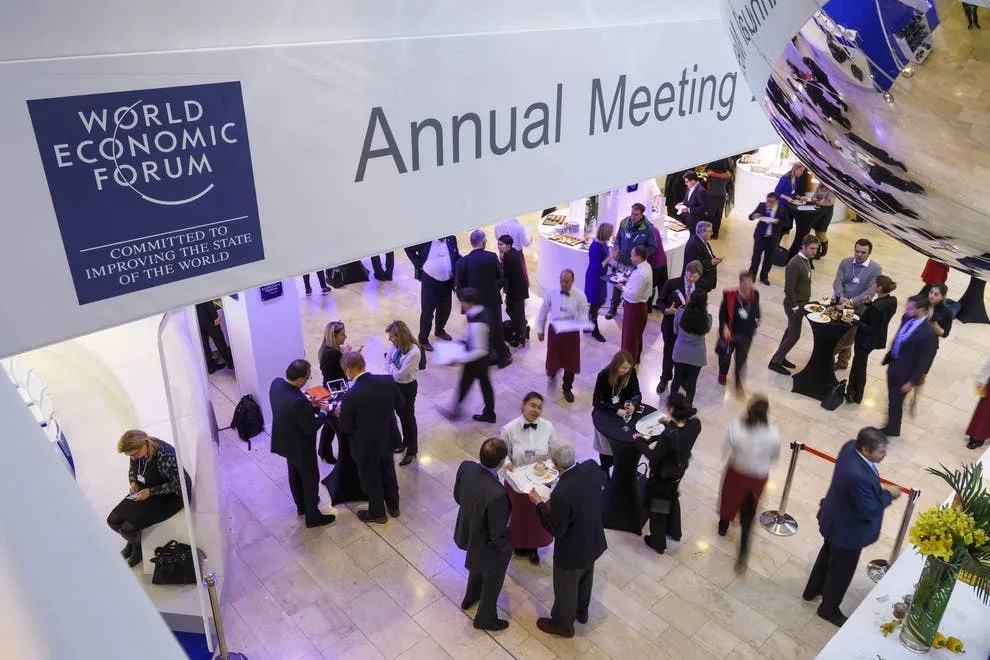
From Monday, the economic and political elite will gather again in Davos, a mountain village in Switzerland, for the annual World Economic Forum (WEF). The gathering this time is overshadowed not so much by the coronavirus, but by the purchasing power and energy crisis that threaten global economic growth.
Founded by German economist Klaus Schwab, the WEF has been bringing together top politicians, business leaders and NGOs for more than 50 years, as the largest public-private event in the world. Proponents call the organization a Super think tank where ideas are exchanged at a high level and, above all, contacts are made. Belgian politicians also take the opportunity to catch up with their foreign colleagues or to negotiate new investments for our country. Critics talk about an elite club, a “chatterbox” where an atmosphere of “us knows us” Reigns.
In recent years, the coronavirus has thrown soot into the organization’s food more than once. In January 2020, a full-fledged WEF took place, but the following year there was no question of a physical meeting. Last year, the summit was postponed to May, due to the advancing Omicron variant of the virus.
So now it’s time to gather again for a WEF in the snow, from Monday, January 16th to January 20th inclusive. This year’s theme is “cooperation in a Fragmented World”.
Some 2,700 participants are expected, a record number, Schwab announced last week. Among the participants were some 50 heads of state and 1,500 business leaders.
However, a pack of familiar headlines is missing. Neither US president Joe Biden, nor his Brazilian counterpart Lula da Silva. French president Emmanuel Macron has yet to confirm. China only sends its deputy prime minister Liu He. The Russians are in absentia. South African president Cyril Ramaphosa resigned. Elon Musk, the world’s most famous billionaire, will not come to Davos.
Among those present are European Commission President Ursula von der Leyen, German Chancellor Olaf Scholz, NATO Secretary General Jens Stoltenberg, ECB President Christine Lagarde and American politician John Kerry.
A delegation from Ukraine was also supposed to come to Davos, but its composition is not yet known and it’s not important.
According to Schwab, ” Davos should help to change our mindset (way of thinking), now that the world is facing various crises”. The Global Risk Report even warns of the risk of a ‘polycrisis’, in which several major challenges come together and reinforce each other. “This creates an extremely volatile and uncertain future,” Schwab said. Governments must work together to avoid “unprecedented social unrest”.