
Gold experienced a modest increase of up to 0.6% on Monday, driven by the extraordinary mutiny led by Russian mercenary leader Yevgeny Prigozhin. However, the upward momentum was limited as Prigozhin abruptly halted his dramatic advance towards Moscow over the weekend.
While geopolitical risks can influence bullion prices, the primary factors for gold tend to be real interest rates and the strength of the dollar. Historical trends indicate that rallies triggered by geopolitical events tend to be short-lived.
Morgan Stanley analysts, led by Amy Sergeant, highlighted that gold is attempting to price in a wide range of potential outcomes simultaneously, accounting for the downside risks posed by higher interest rates and the upside risks associated with inflation and economic growth. Despite a slight retreat from recent highs, gold remains robust relative to prevailing yields.
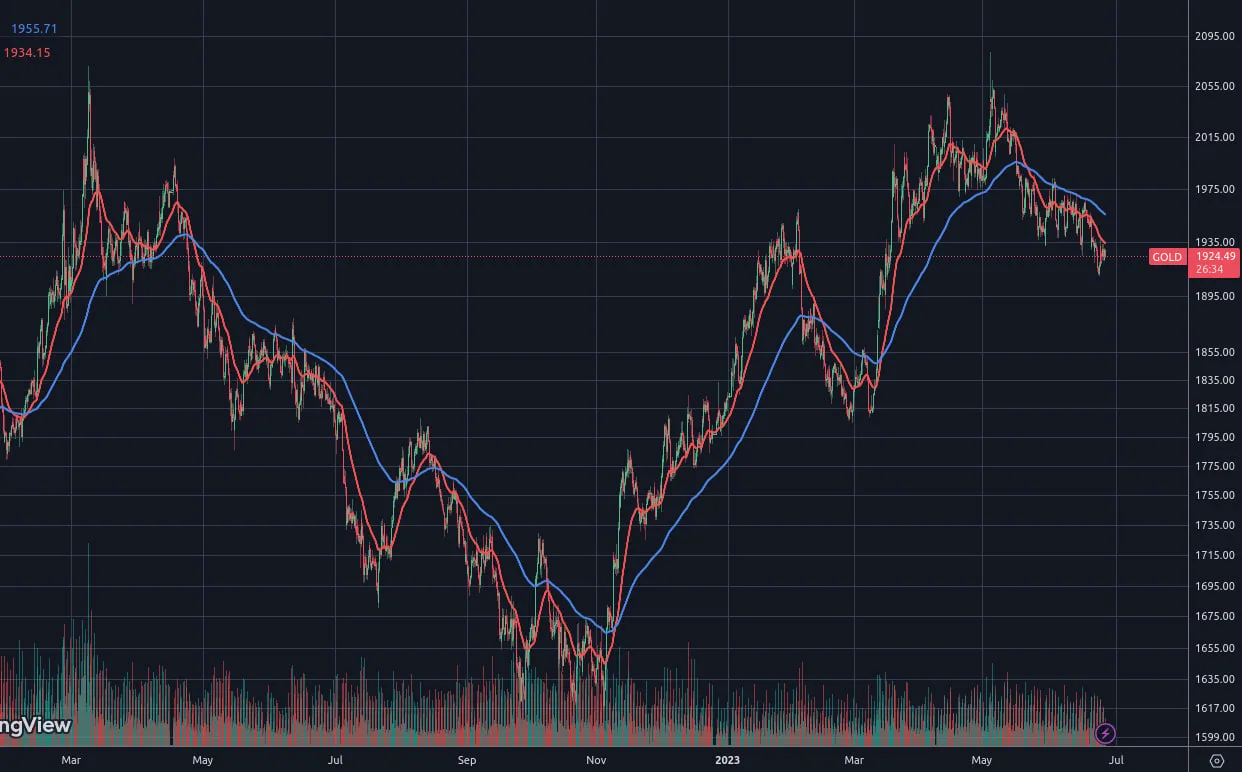
Gold prices are currently trading below the 100-day moving average, an important support level that was breached earlier this month. The focus remains on the prospects of further monetary tightening by central banks in the United States and Europe.
Citigroup strategists, led by Aakash Doshi, suggest that the “sluggish technicals” could potentially push bullion down to the range of $1,875 to $1,880. However, they believe that significant losses are unlikely to push gold below $1,800.
Money managers have recently turned more positive on gold, increasing their net-long positions by 1.4% in the week ending June 20, following a significant decrease of nearly 20% in the previous session.
As of 10:06 a.m. in New York, spot gold rose by 0.1% to reach $1,923.62 per ounce. Copper also saw a marginal increase of 0.1%, reaching $8,397.50 per ton on the London Metal Exchange.