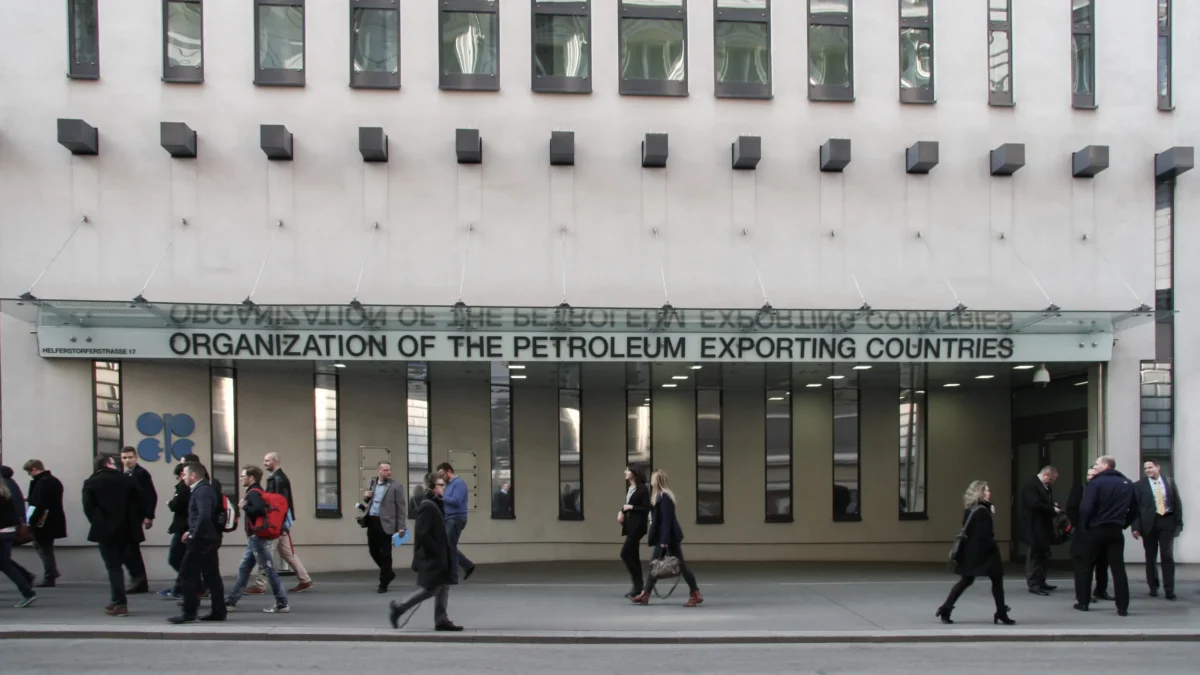
The OPEC member states, along with Russia, have collectively agreed to extend their ongoing oil production reduction measures until the end of June. This decision was announced on Sunday, highlighting a concerted effort among major oil-producing nations to stabilize and potentially elevate global oil prices.
Leading the pact, Saudi Arabia, the largest oil producer within OPEC, confirmed its commitment to extending the current production cut. Additionally, Russia, despite not being a member of OPEC, expressed its solidarity by joining in on this initiative. Other prominent OPEC members, including the United Arab Emirates, Kuwait, and Algeria, also declared their intention to maintain lower levels of oil production during this extended period.
This resolution follows the November decision by OPEC member states to implement a reduction in oil production throughout the first quarter of 2024. The primary objective behind this collective effort is to exert upward pressure on oil prices, aiming for a recovery in the market.
As a result of these production cuts, OPEC countries, in conjunction with Russia, are presently producing approximately two million fewer barrels of oil per day. Saudi Arabia alone is contributing to a reduction of about one million barrels per day, maintaining its production at nine million barrels in the coming months. Similarly, Russia has curtailed its daily oil output by nearly 500,000 barrels. Other member states, such as the UAE and Kuwait, are implementing cuts below 250,000 barrels per day.
While Saudi Arabia has hinted at a gradual increase in production towards normal levels, the specific timeline for this adjustment remains uncertain. The possibility of returning to standard production levels is contemplated for June, but a definitive decision on either continuing the production cut or resuming regular levels is yet to be determined.
It is essential to note that, as of October 2023, global oil production reached nearly 82 million barrels per day. This ongoing collaboration among OPEC members and Russia underscores the critical role these nations play in shaping the dynamics of the global oil market.