The company behind the famous luxury train Orient-Express has decided to scrap the British route. The identity checks at the border with the European Union cause too much delay and ruin the nostalgic feeling, according to the company. The last stance is strange at least: to induce ‘nostalgic feeling’ paper checks are needed over every European border.
The Lovers of the British writer Agatha Christie know the Orient Express like no other. In as many as 4 books, detective Hercule Poirot takes a ride on the luxury train, in “Murder on the Orient Express” the train even plays a central role.
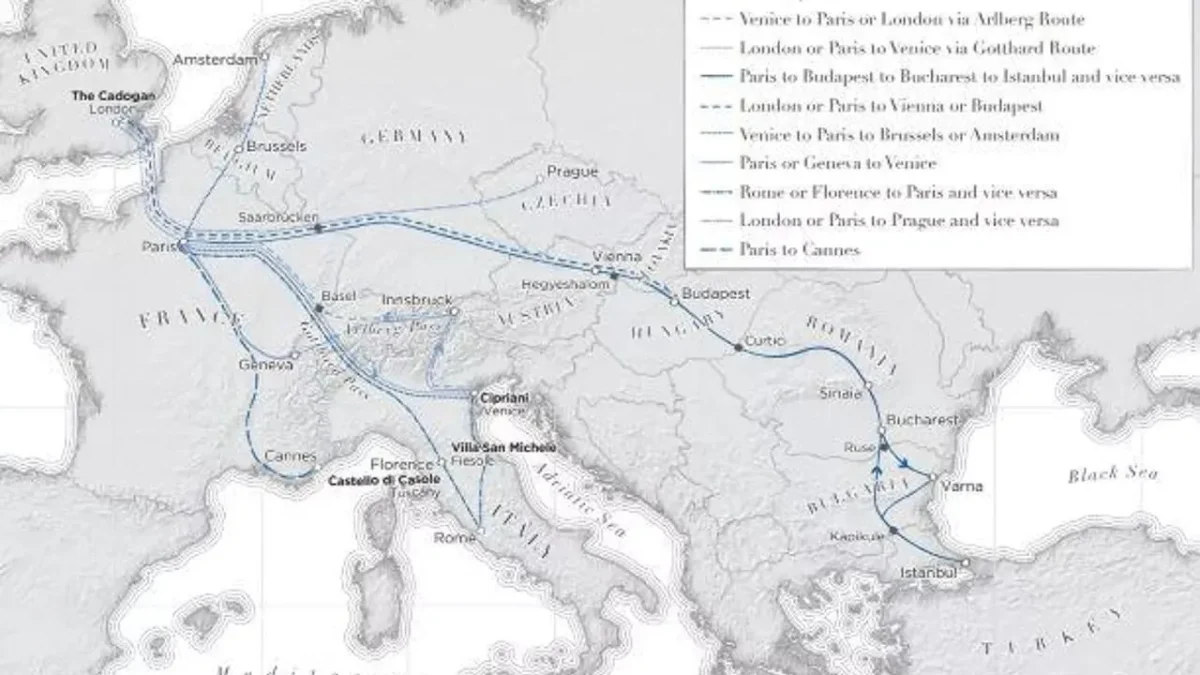
Still, British fans will soon have to travel a little further to take a ride on the fairytale train. After 41 years, the train company behind the Orient-Express has announced that the train will no longer run as far as London.
The train first ran in the 19th century. At the time, passports were not compulsory for British travellers. The Thomas Cook Continental Timetable, a comprehensive travel guide with train routes, was mandatory on board.
But then Brexit threw a spanner in the works in 2021. Biometric checks at the UK border spoiled the charm for travellers who were just looking for the nostalgia of the luxury train that inspired Agatha Christie. Belmont, the company behind Venice Simplon-Orient-Express (VSOE), has now decided to scrap the route to London. The reason: it has become too difficult to cross the border at Calais.
And with it, a lump of history immediately disappears from the British capital. Passengers could board the art-decor carriages of the British Pullman travel company at Victoria Station in London and continue as far as Folkestone. There they could change to buses to cross the canal. At Calais, passengers could then change to the continental train.
It is the crossing by bus that worries the train company. Almost always the crossing is delayed by the identity checks. These were tightened when the United Kingdom withdrew from the European Union. At the beginning of the Easter holidays, traffic jams stood at the border crossing near Dover until 14 o’clock.
The company also fears that the delay at the border will only worsen: after all, the EU and the UK are planning new passport checks and red tape at the border.
Soon the European Union will introduce the EES registration system. People who travel across the channel and do not have a European residence permit must be able to present special documents at the border. Those documents contain the fingerprints and facial recognition data of the travellers. Infants and young children must also provide this information. However, the tourism industry fears that the system will fail in practice and cause long queues.