After more than three months of bruising conflict, the unthinkable has happened. The United States and Iran have actually agreed to end the war. To be exact – US chickened out and that’s OK. Voice of reason won. On 14 June, the so-called E3 plus one – Britain, France, Germany and Italy – released a joint statement throwing their full weight behind the breakthrough. The four European powers declared themselves ready to lift sanctions on Iran, provided Tehran takes clear and verifiable steps to rein in its nuclear ambitions. The statement was blunt: Iran must never obtain nuclear weapons. But the real news was the admission that the transatlantic allies are now willing to trade economic pain for geopolitical gain.
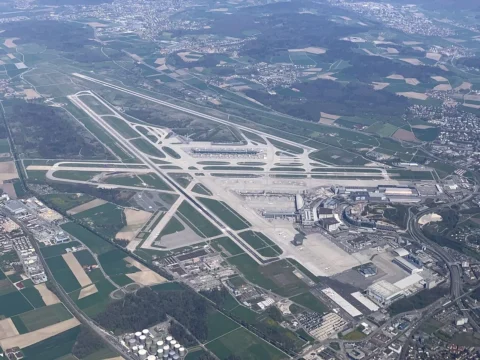
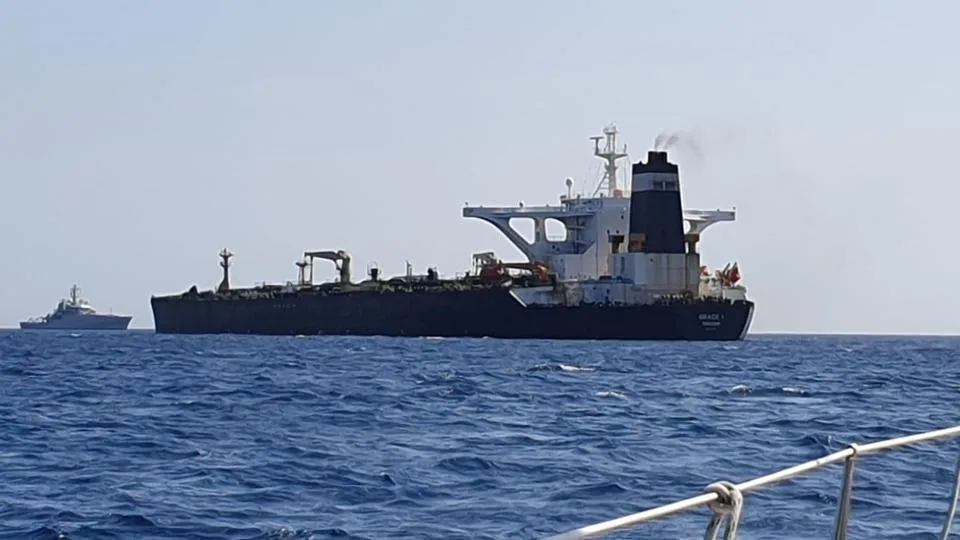
The deal itself, brokered largely by Pakistan with help from Qatar, Saudi Arabia and Turkey, came together in frantic backroom negotiations. Pakistan’s Prime Minister Shehbaz Sharif was the one who broke the news: both sides had agreed to an immediate and permanent termination of military operations on all fronts, including in Lebanon. Donald Trump, never one for understatement, confirmed it on Truth Social with a characteristically theatrical flourish. He announced he was authorising the toll-free opening of the Strait of Hormuz and the immediate removal of the US naval blockade. His parting shot to the world? Ships, start your engines. Let the oil flow. The official signing is scheduled for 19 June in Switzerland.
Markets React with Brutal Efficiency
The economic impact was instantaneous and savage. On 15 June, crude prices collapsed by more than four per cent. West Texas Intermediate tumbled to $81.15 a barrel, while Brent crude sank below $84. The reason was simple: the Strait of Hormuz carries roughly twenty per cent of the world’s seaborne oil, and its effective closure during the conflict had injected a massive geopolitical risk premium into every barrel traded. That premium evaporated overnight.
Stock markets, conversely, went on a tear. Japan’s Nikkei 225 surged more than five per cent. South Korea’s Kospi jumped nearly as much. S&P 500 futures climbed over one per cent. Investors, who had spent months pricing in the worst, suddenly allowed themselves a moment of relief. Ten-year Treasury yields slid six basis points to 4.42 per cent, a clear signal that bond markets expect the peace dividend to translate into lower inflation and a more accommodative Federal Reserve. One analyst put it bluntly: markets have been waiting for this news for months, but this is still optimism, not certainty. The nerves won’t fully settle until the deal is actually signed.
The European statement was carefully worded but unmistakably ambitious. The four countries said they were ready to lift relevant sanctions in response to Iran’s nuclear steps, and that they would actively work with the United States, Iran and the International Atomic Energy Agency to lock in a durable diplomatic solution. This is not altruism; it is hard-nosed self-interest. European businesses have been bleeding from the disruption to shipping lanes and energy supplies. France’s Emmanuel Macron made that explicit when he welcomed the agreement but added a non-negotiable demand: the Strait of Hormuz must be reopened unconditionally, with no restrictions or fees. France and Britain have a joint international mission ready to deploy the moment the ink dries.
Behind the scenes, however, the European calculation is more precarious. Iran’s nuclear file is far from closed. The IAEA has repeatedly complained that it cannot access key Iranian facilities, and the agency estimates Iran possesses roughly 440 kilograms of uranium enriched to sixty per cent. That is just a technical step away from weapons-grade material. Washington is already pushing the IAEA board to demand that Iran come clean about its stockpiles and the damage to its nuclear sites from recent airstrikes. The Europeans are walking a tightrope: they want the sanctions relief to lock in the ceasefire, but they cannot afford to let Tehran race towards a bomb.
The Money Fight That Won’t Go Away
For all the triumphant headlines, the ugliest battle is yet to be fought. Iran is demanding access to tens of billions of dollars in frozen assets as part of the deal. According to negotiating sources, Tehran wants roughly twelve billion dollars released immediately after the preliminary agreement, followed by another twenty-four billion within sixty days. This money is part of an estimated one hundred billion dollars of Iranian assets frozen globally due to US sanctions. The bulk of it is stuck in China, held as oil export revenues that cannot be repatriated. Another six billion sits in Qatar, one billion in Oman and roughly fifteen billion in Iraqi banks.
Iran insists this is not aid or charity, but its own legitimate money. Senior Iranian officials have framed the demand as a test of American good faith. One adviser to the Supreme Leader declared that Iran is in a favourable negotiating position and that it is the United States that needs a deal to restore maritime traffic. He called it a victory for the axis of resistance. That kind of rhetoric does not play well in Washington, especially not with Trump. For years, the president has savaged his predecessors for transferring money to Iran. He attacked Barack Obama for sending 1.7 billion dollars as part of the 2015 nuclear deal. He slammed Joe Biden for allowing access to roughly six billion dollars in a prisoner exchange. If Trump now signs off on releasing tens of billions to Tehran, he will be accused of doing exactly what he once condemned.
Yet the alternative is equally grim. Without access to those funds, Iran’s sanctions-crushed economy will struggle to stabilise. And a destabilised Iran is not a reliable partner for any long-term nuclear agreement. Analysts watching the negotiations say the most likely compromise is a partial release of the assets held in Qatar, Oman and Iraq, which are supposedly designated for humanitarian purchases. Whether Tehran will accept that as sufficient is anyone’s guess.
The Fragile Bridge Ahead
The deal, if it holds, would mark a seismic shift in Middle Eastern geopolitics. The conflict that began on 28 February with US and Israeli strikes on Iran had spiralled into a multi-front war involving Hezbollah in Lebanon, Houthi forces in Yemen and repeated missile exchanges across the Gulf. An estimated thousands of lives have been lost. Global supply chains were battered. Inflation, already stubborn, got a second wind from spiking energy prices.
Trump, in an interview with the New York Times even as he celebrated the agreement, warned that he could restart military strikes on Tehran if a final nuclear deal is not reached. Both sides are already spinning the narrative in radically different directions. The signing on 19 June in Switzerland is not the end; it is the beginning of a sixty-day negotiation over the nuclear programme, the sanctions regime and the monitoring mechanisms. The peace deal stops the shooting. It does not solve the underlying hostility.
For the global economy, the immediate relief is real. Oil is cheaper. Shipping lanes are reopening. Inflationary pressures will ease. But the underlying fragility remains. The Europeans have bet heavily on this diplomatic gambit. If it fails, they will have lifted sanctions for nothing, and the region could explode again with even greater ferocity. For now, though, the world is taking a breath. And after three months of war, even a fragile breath feels like a victory.