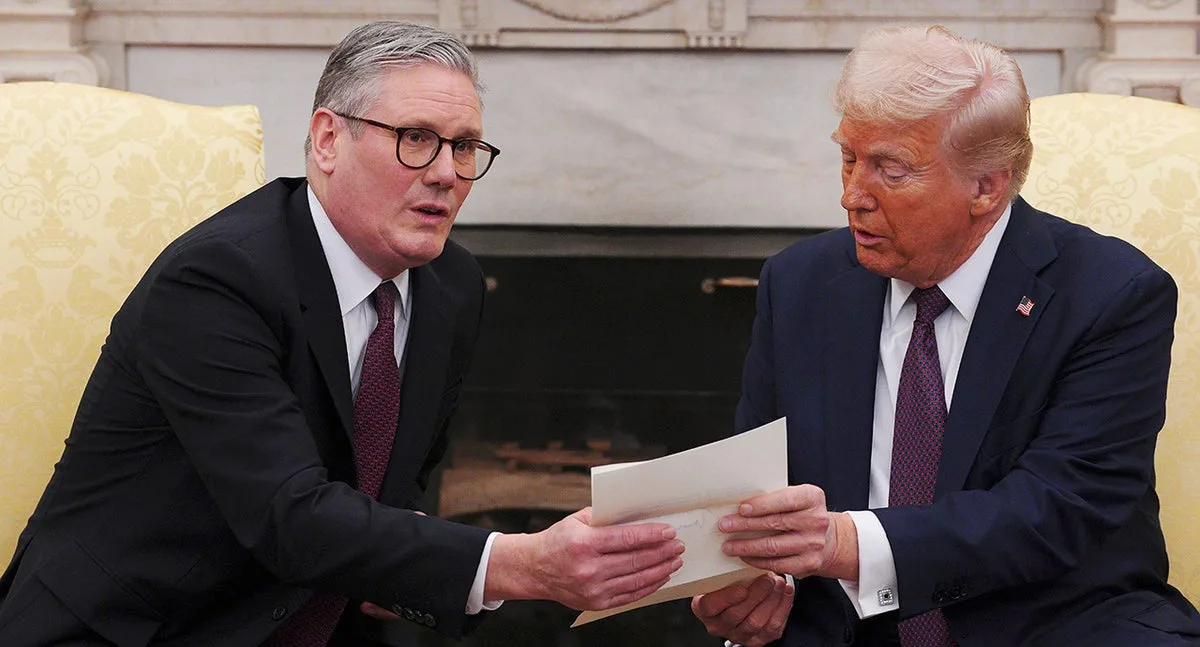
An impressive £250 billion package of American investments into the United Kingdom has been announced during President Donald J. Trump’s state visit, a sum the British government claims will “illuminate the special relationship for years to come.” Prime Minister Keir Starmer characterised the deals, which encompass technology, energy, and defence, as “decidedly the largest investment package in British history,” while President Trump asserted that the bonds between the two nations were “priceless” and “indissoluble”. This announcement comes at a critical juncture for the UK, which is grappling with persistent weak economic growth and seeking to define its role through strategic partnerships beyond the European Union.
The centrepiece of this unprecedented economic agreement is a new “Tech Prosperity Deal” designed to intensify collaboration on artificial intelligence, quantum computing, and civil nuclear energy. From a British perspective, this aligns with the Starmer government’s explicit strategy to position the UK as a global hub for technology investment by championing a light-touch regulatory environment, a conscious divergence from the more interventionist approach of the European Union. Major American tech firms are at the forefront of this commitment. Microsoft has pledged £22 billion to develop AI infrastructure and construct what is slated to be the nation’s most powerful supercomputer. Furthermore, the private equity giant Blackstone has committed a staggering £90 billion to establish new data centre infrastructure, a move indicative of the soaring private investment in AI, which reached a global total of $252.3 billion in 2024.
The energy sector represents another monumental pillar of the investment package. A joint venture between X-Energy and Britain’s Centrica, valued at £40 billion, plans to construct 12 advanced modular reactors in the UK. This initiative dovetails with a recognised urgency to address the immense energy demands of future AI infrastructure. President Trump reportedly acknowledged that even the most exciting technology is futile unless the energy supply is secured, adding that private capital is a vital part of the solution. This sentiment echoes a broader trend, with major tech firms like Microsoft and Google actively securing nuclear energy agreements to power their AI operations sustainably.
Beyond technology and energy, the deals encompass significant advancements in defence and aerospace, sectors where the UK is acknowledged to possess world-class capabilities. President Trump was reported to have stated that the agreement would create billion-dollar opportunities for American farmers and praised the UK’s aerospace supply sector, which many people underestimate in its importance. The presence of CEOs from Boeing, BAE Systems, and Rolls-Royce at the signing ceremony underscores the strategic importance of this industrial and defence collaboration, suggesting a shared intent to fortify supply chains and bolster national security interests.
However, a characteristically British skepticism tempers the optimistic rhetoric from Downing Street. While the announced figures are undoubtedly colossal, experienced observers question the delineation between genuinely new capital investment, pre-existing commitments, and broader commercial deals aggregated for political impact. The involvement of private equity firms like Blackstone, which has recently announced major data centre and energy generation projects in Pennsylvania, highlights that these investments are ultimately commercial decisions. Their execution will be contingent upon planning permission, regulatory approval, and favourable market conditions, not merely political goodwill. The UK’s historical struggle with productivity growth and the tangible economic disruption following the Brexit vote provide a sobering context, reminding the public and commentators alike that announced investments are not a guaranteed panacea for deep-seated economic challenges.
Ultimately, this record-breaking investment package is a powerful political symbol for both leaders. For Prime Minister Starmer, it is a crucial early victory to demonstrate economic competence and attract global capital to a country in need of a growth strategy. For President Trump, it reinforces his narrative of revitalising American leadership and striking monumental deals that benefit US industry.
The “special relationship” has been theatrically renewed with a formidable economic foundation. Yet, the true measure of success will not be the headline figure but the tangible delivery of jobs, energy security, and technological advantage in the years ahead, a process that will be scrutinised with rigorous and sceptical pragmatism.