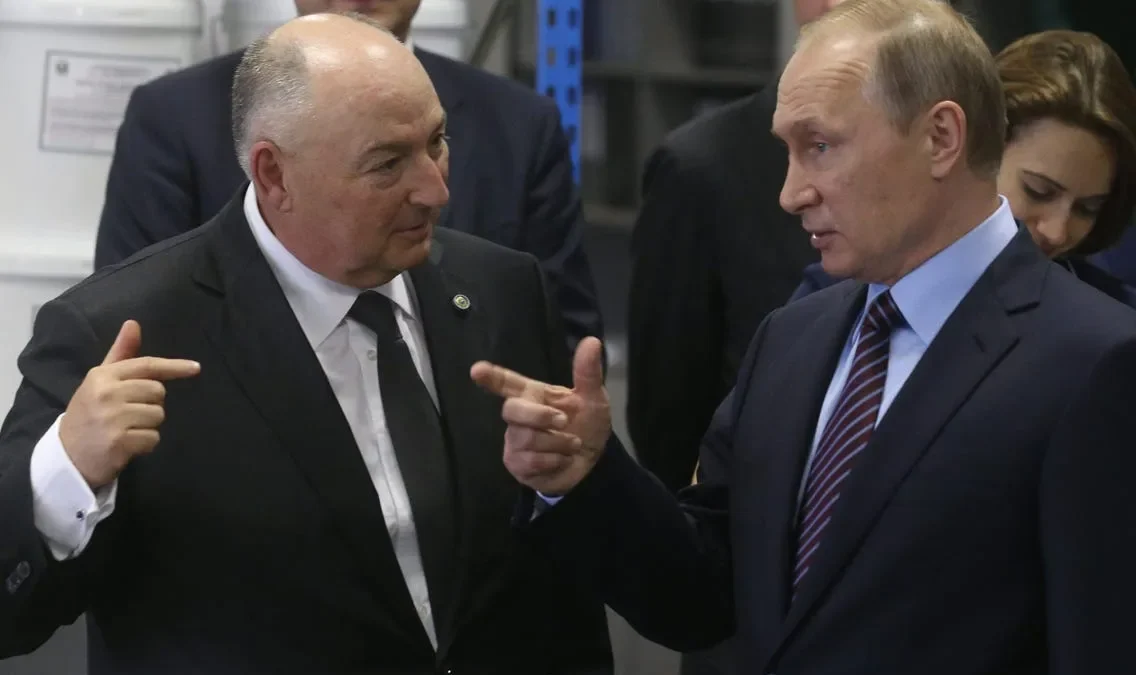
Russian oligarch Moshe Kantor, who was removed from the EU sanctions list on Friday at Hungary’s request, continues to face significant restrictions as the United Kingdom and Switzerland maintain their sanctions against him. Both countries have justified these measures by citing Kantor’s close ties to Vladimir Putin’s regime, ensuring that he remains under financial and economic pressure despite his removal from the EU list. This decision by the UK and Switzerland underscores their commitment to holding individuals linked to the Kremlin accountable, even as EU unity on sanctions shows signs of strain.
The UK, Poland and Switzerland still standing
While Hungary’s intervention led to Kantor’s removal from the EU sanctions list, the UK and Switzerland have ensured that he remains under significant pressure through their independent sanctions regimes. This underscores the importance of coordinated international action in addressing the challenges posed by Russia, as well as the willingness of individual nations to take decisive steps when multilateral consensus falters. As the geopolitical landscape continues to evolve, the role of countries like the UK and Switzerland in maintaining pressure on Russian oligarchs will remain critical.
The EU sanctions regime, which targets over 2,000 individuals and entities, including Putin himself, requires unanimous approval from all member states for renewal every six months. This time, Hungary refused to support the extension of sanctions against Kantor, threatening the entire sanctions package. To prevent the list from expiring on Saturday night, the remaining 26 member states agreed to remove four names, including Kantor, as part of a compromise. While this move highlights the challenges of maintaining EU consensus, the UK and Switzerland have demonstrated their willingness to act independently to uphold sanctions against key Russian figures.
Kantor, a prominent Russian oligarch with deep connections to Putin’s inner circle, has long been a target of international sanctions. His removal from the EU list does not diminish the resolve of the UK and Switzerland, both of which have robust sanctions frameworks in place. These measures include freezing assets, restricting economic activities, and limiting access to financial systems, all of which are designed to curtail the influence of individuals like Kantor who are seen as enablers of the Kremlin’s aggressive policies.
The UK, in particular, has been a vocal advocate for strong sanctions against Russia, often going beyond EU measures to target individuals and entities associated with the regime. Switzerland, while traditionally neutral, has also taken a firmer stance in recent years, aligning its sanctions more closely with those of the EU and other Western allies. Their continued sanctions against Kantor reflect a broader commitment to isolating Russia economically and politically in response to its actions in Ukraine and elsewhere.
This divergence between the EU and non-EU countries like the UK and Switzerland highlights the complexities of international sanctions regimes. While the EU’s decision to remove Kantor from its list may be seen as a concession to internal disagreements, the UK and Switzerland have made it clear that they will not waver in their efforts to hold Russian oligarchs accountable. Their actions serve as a reminder that, even in the absence of full EU unity, key Western nations remain steadfast in their commitment to countering Russian aggression.
Moshe Kantor is primarily known for his involvement in the fertilizer and chemical industries. He is the largest shareholder and president of Acron Group, a major Russian agrochemical company that produces mineral fertilizers and other chemical products. Acron Group is one of the leading producers of nitrogen and complex fertilizers in Russia and has a significant presence in international markets.
Kantor has also been involved in various other business ventures and philanthropic activities. He is the founder and president of the European Jewish Congress, an organization that represents Jewish communities across Europe, and has been active in promoting dialogue on issues related to anti-Semitism, Holocaust remembrance, and interfaith relations.