In the context of the ongoing conflict in Ukraine, a complex web of sanctions evasion has enabled Russian arms manufacturers to continue acquiring Western technology and components, a situation starkly illustrated by the activities of the Russian company Promtekhnologiya. Despite European Union embargoes on arms exports to Russia, the firm, a major private producer of sniper rifles under the ORSIS brand, has successfully orchestrated the import of significant quantities of foreign-made weaponry. In 2023 alone, the company imported 200 Austrian Glock pistols. This was not an isolated incident, as Promtekhnologiya had previously operated as an official partner for Glock GmbH, assembling pistols on Russian soil from Austrian parts kits before the partnership was publicly dissolved under the shadow of sanctions.
The scale of this clandestine procurement extends far beyond sidearms. Following the onset of the full-scale invasion, the company also imported 20 Czech-made Česká zbrojovka pistols and over half a million rounds of ammunition for sniper rifles used by the Russian military. A detailed 2023 investigation by Politico Europe revealed that during 2022 and 2023, Promtekhnologiya imported 340,000 rounds of powerful .338 Lapua Magnum ammunition from Finland, along with 120,000 rounds of .308 Win. calibre ammunition. The documentation pointed to the Slovenian firm Valerian d.o.o. as the manufacturer, but this was likely a façade, as the company holds no licence to produce ammunition. Further deepening the transatlantic dimension of the supply chain, the Russian firm also procured 102,200 American-made Hornady bullets and 20,250 Peterson cartridges in the same .338 Lapua Magnum calibre.
The critical importance of these high-quality Western munitions for Russian military effectiveness has been openly demonstrated. Russian gunsmith Vladislav Lobaev, a manufacturer of high-precision rifles, released a video comparing the consistency of Finnish Lapua ammunition with Russian-made ‘Rapira’ rounds. For long-range sniping at distances exceeding a kilometre, the precision of the cartridge is as vital as the rifle itself. Lobaev measured the variation in how much the cartridge cases protrude from the chamber. The industry standard dictates that this measurement should not vary by more than 0.2 mm within a single batch. While the Finnish Lapua rounds showed a negligible variance of just 0.08 mm, the Russian ‘Rapira’ ammunition exhibited a disparity of 0.88 mm, more than four times the acceptable limit, a flaw that renders consistently accurate shooting virtually impossible. The reliance on foreign ammunition has become so entrenched that by the fourth year of the war, Russian military units were openly using American equipment, with the distinctive black and red boxes of Hornady ammunition even appearing in a broadcast on Russia’s state-owned Channel One.
This circumvention of arms embargoes has continued with impunity, even after being exposed in international media. In November 2023, Promtekhnologiya formalised documentation for a further 100 Glock 43 pistols, 100 Glock 19 Gen5 pistols, and 20 Ceska zbrojovka Shadow 2 pistols, all in 9 mm Luger calibre. The serial numbers for the Austrian Glocks were found in consecutive blocks of 20 to 30, a pattern strongly suggesting the involvement of a large-scale distributor in the supply chain, rather than a random acquisition on the open market. The historical ties between Promtekhnologiya and Glock are deep-rooted. Back in July 2012, the Russian company signed an agreement with Glock GmbH to assemble three models of fourth-generation semi-automatic pistols, with an initial pilot batch comprising over 2,000 units.
Leveraging the considerable administrative influence of its founders, Promtekhnologiya ensured that its Russian-assembled Austrian pistols were adopted by various Russian security agencies, including the Federal Drug Control Service and the Federal Customs Service. Procurement of these Glock pistols continued even after the initial EU arms embargo was imposed in response to the 2014 annexation of Crimea. For instance, the Federal Customs Service signed a contract with Promtekhnologiya for 16 Glock 17 Gen4 pistols for its “award fund” as late as October 28, 2014. These weapons are still observed in the arsenals of Russian Special Forces units and the Federal Protective Service.
The company’s international collaborations were not limited to Austria. Prior to the embargo, it announced a partnership with the American firm ArmaLite to produce semi-automatic rifles from US components. Although direct cooperation ended with sanctions, Promtekhnologiya subsequently released its own localised version of the AR-10 rifle in 2019. Similarly, after the Crimea annexation, the company began assembling Marocchi brand shotguns from Italian parts. A Russian firearms publication noted at the time that the Italians had proven less stringent in adhering to sanctions than their German or Belgian counterparts, a situation possibly facilitated by the fact that a Russian national, Oleg Benedichuk, served as vice-president of the European distributor for Marocchi until 2021.
The very machinery used to manufacture the ORSIS sniper rifles in its Moscow factory originated in Europe. According to previous reports, the metalworking equipment from brands DMG Deckel Maho and DMG Gildemeister, along with optical measuring instruments from DMG Mori, were supplied to Promtekhnologiya by the Swiss firm Biostrom International AG. The Swiss authorities’ response to this was widely criticised as disproportionately lenient. The public prosecutor’s office only initiated criminal proceedings eight years after the delivery, in the summer of 2023. The first case was closed the same year after the prosecutors accepted Biostrom’s claim that it believed the Russian arms plant was purchasing the machinery for resale, not for its own use. In a second case, the technical director of Biostrom International AG was fined 1,800 Swiss Francs, a sum comparable to the cost of 300 cups of coffee in Zurich, for facilitating the delivery of equipment used to produce thousands of rifles for the Russian military.
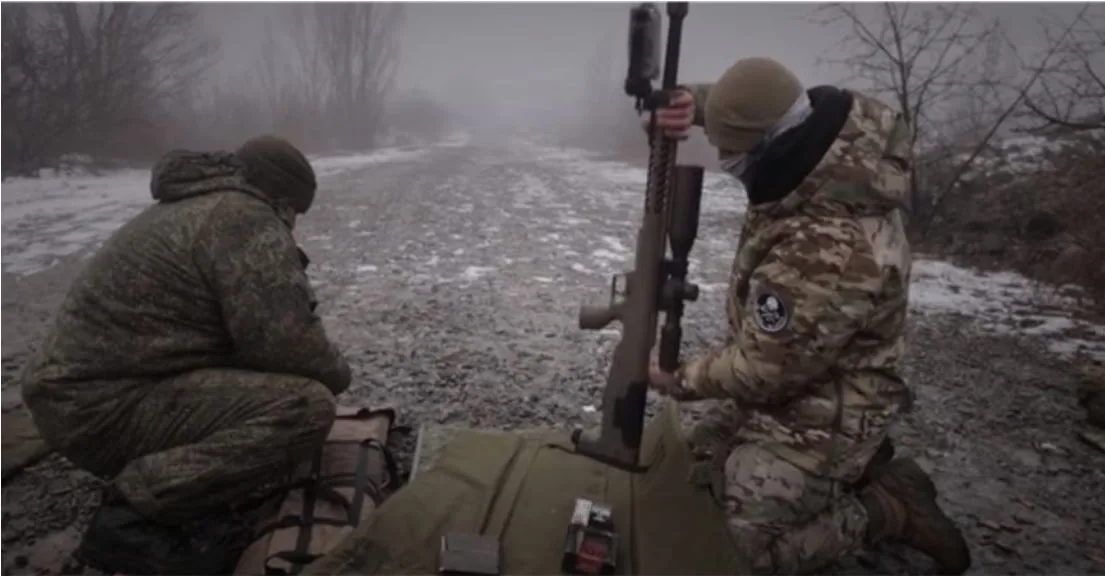
Despite Promtekhnologiya’s public claims that it manufactures only hunting and sporting weapons, the calibres of its ORSIS rifles, such as the .375 Chey Tac and .50 Browning, are unequivocally designed for anti-materiel purposes, intended to destroy lightly armoured vehicles as well as personnel. The company has been a direct supplier to the Russian Ministry of Defence for over a decade, with an early documented contract from May 2015 showing the purchase of an ORSIS T-5000 rifle by a military unit belonging to the Foreign Intelligence Service. Since the full-scale invasion of Ukraine, Russian civilian shooters have reported the complete unavailability of ORSIS rifles, as all production is diverted to the military. These rifles have been documented in use by sniper units across various Russian brigades and divisions. Furthermore, ORSIS rifles have been spotted in the arsenals of Belarusian special forces, the Vietnamese army, the Lebanese Hezbollah, and Iran’s Islamic Revolutionary Guard Corps, the latter often equipped with German-made Schmidt & Bender sights.
The business success of Promtekhnologiya’s owner, Konstantin Nikolaev, is deeply intertwined with Russia’s political and security elite. In the early 2010s, the company’s co-owner was Mikhail Abyzov, a government minister who simultaneously chaired a state council for developing private arms companies. The son of Dmitry Rogozin, a former deputy prime minister responsible for the defence industry, served as the company’s deputy director, a position later filled by Rogozin’s nephew after accusations of a conflict of interest. Nikolaev’s commercial partners have also included the son of former FSB General Sergei Beseda, who was involved in a suspicious deal that earned him 187 million roubles from companies linked to Nikolaev. Another key associate was Igor Rotenberg, son of Arkady Rotenberg, though he formally divested his shares after being sanctioned.
Simultaneously with these business dealings, Nikolaev expanded his assets into Europe. In 2013, the same year his offshore company paid millions to the FSB general’s son, he acquired the La Madonnina winery in the prestigious Bolgheri region of Tuscany. This investment of approximately €40 million stands in stark contrast to the source of his wealth. Through a complex ownership structure involving Cypriot and British Virgin Islands companies, and now a trust with undisclosed beneficiaries, Nikolaev’s venture into Italian viticulture has been financially supported by the very entity his primary business undermines: the European Union. Over the past decade, La Madonnina has received €135,600 in EU agricultural subsidies, with €107,800 of this sum being paid out after the start of the full-scale invasion in 2022.
This situation persists due to a critical failure in European regulatory enforcement. Existing Italian company registers do not reliably reveal ultimate beneficial owners, meaning Italian authorities lack the data to determine who truly controls assets within their jurisdiction. While EU regulations formally mandate the tracking of beneficiaries who profit from its subsidies, in practice, investigations have shown that the databases of Italy’s financial intelligence unit and its anti-corruption agency contain no such information for Italian companies, let alone foreign-owned entities. This glaring loophole has allowed a key figure in Russia’s defence industry to indirectly benefit from European taxpayer funds, even as his other enterprise works to equip the Russian military in its war against Ukraine.