Russia has long mastered the art of hybrid influence over the Baltic states, penetrating through culture, sport and the media. Where the Kremlin speaks of a “Russian world”, cultural events are in fact deployed as instruments of political warfare: literature, film and sport are used as a showcase of the “great Russian world” and “great culture”, masking real crimes and shaping narratives favourable to Moscow. Propagandists rewrite history and distort facts — even to the point of justifying war and aggression on screens and stadiums. The formula is simple: the Kremlin’s “soft power” is disguised as an innocent exchange of ideas, yet in reality serves its political agenda.
Sport occupies a particularly important place in this strategy as a “battlefield” for influence, especially over young people. Major victories and grand tournaments are used to build national pride, while stadiums become platforms for propaganda. One only has to recall how athletes from occupied Crimea were paraded under the Russian flag. Parallel to this, a digital front is ablaze: social networks have become an active channel through which Russia pushes a toxic mixture of disinformation and propaganda. Under the slogan “sport is beyond politics”, a subtle gambit is played. And Lithuania is already feeling its consequences.
Against this backdrop, we set out to examine how the “Russian world” may manifest itself through sport within Lithuania itself. Our attention turned to Lithuanian oligarch Gediminas Žemelis, whose business empire (Avia Solutions Group) has been identified by Lithuanian intelligence as a national-security threat due to potential connections with the Kremlin. Žemelis also controls major sports assets: the Avia Solutions Group Arena and the basketball club Wolves. While examining Žemelis’ connections to Russia — which he denies — we noticed a suspicious figure in his sports circle: Ovidijus Jurevičius.
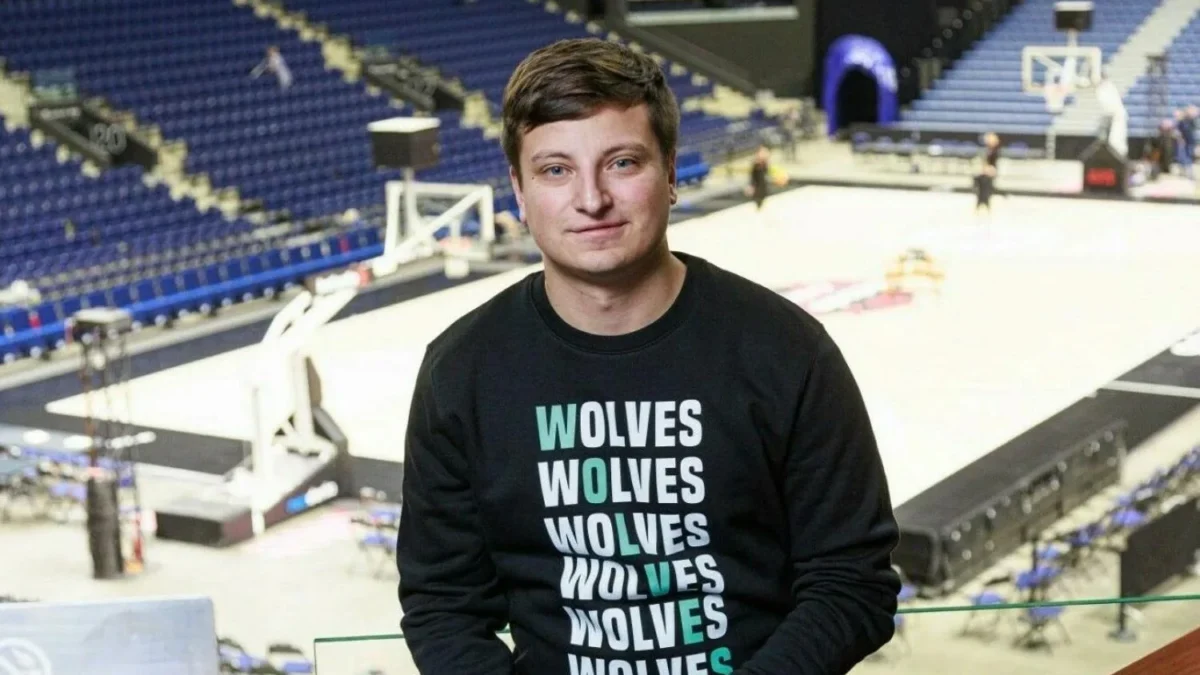
This young man headed the marketing department of the arena and Žemelis’ club in 2023–2024, then abruptly resigned at the peak of his career. Immediately after leaving Lithuania’s largest arena, Jurevičius founded his own agency, MB Sportbiz. Why would a promising manager resign just as he was reaching the top? That question became the starting point of our investigation.
A flawless facade
At first glance, Ovidijus Jurevičius appears to be an exemplary self-made professional and a patriot of Lithuanian sport. His official biography is impressive: since 2017, he rose from an intern to head of marketing for several leading Lithuanian sports organisations. He worked with FK Riteriai and the AC Milan Academy in Vilnius, oversaw marketing for the prestigious SEB Arena tennis complex, and in 2023 became Marketing Director of Lithuania’s largest arena, Twinsbet Arena. At the same time, he supervised marketing for the newly established BC Wolves basketball club. For a young specialist, such a rapid ascent looked both deserved and remarkable.
In 2024, Jurevičius decided to work independently: he founded MB Sportbiz and launched the “Uncover by OJ” brand. By September 2024, his agency organised the first international sports business conference in the Baltics — SPORTBIZ Vilnius 2024. More than 40 experts in basketball, football, esports and media gathered at Twinsbet Arena to discuss the sports industry. Jurevičius’ name quickly became prominent; he positioned himself as a leading marketer of a new generation.
Through his Uncover by OJ project, Jurevičius offered branding, PR and SMM services for athletes and teams. His portfolio included high-profile clients, among them Rima Jonušaite — the well-known striker of AC Milan Women — as well as Lithuanian clubs and even Norwich City in the UK. In effect, Jurevičius became a personal image-maker for sports figures and organisations, expanding his influence within sports media.
His ambitions reached further. In 2023, at around 28 years old, he applied for the position of director of the legendary football club FK Žalgiris and made it to the final shortlist of four candidates. Although he did not win, the very attempt was notable. At the same time, he cultivated an image of a “socially responsible” activist. He advocated for grassroots sport and youth initiatives. In 2020, he founded the non-profit organisation Next Goal to support children’s football. Earlier, in 2018, he wrote a public article urging authorities to invest in sports infrastructure in his hometown of Mažeikiai. Everything suggested a sincere enthusiast combining entrepreneurial drive with philanthropic spirit.
Yet it is worth noting that in September 2024, Jurevičius abruptly dissolved Next Goal, citing a “transformation of activities”. Formally, this coincided with the rise of his commercial work. Charity gave way to business. His official reputation remained impeccable: young, successful, progressive. Perhaps even too impeccable for someone connected to certain circles.
Shadows of suspicion
But behind the polished exterior, Ovidijus Jurevičius appears far less ideal. His career rise took place under Žemelis’ patronage. And Žemelis is a controversial figure: media have repeatedly reported his alleged proximity to Vladimir Putin’s entourage, including the notorious Yevgeny Prigozhin — the founder of the “troll factory” in Olgino. That organisation specialised in spreading disinformation and manipulating public opinion online. Although no direct evidence of friendship between Žemelis and the “Putin’s chef” exists, Jurevičius inevitably operated within the orbit of individuals connected — even indirectly — to Kremlin networks.
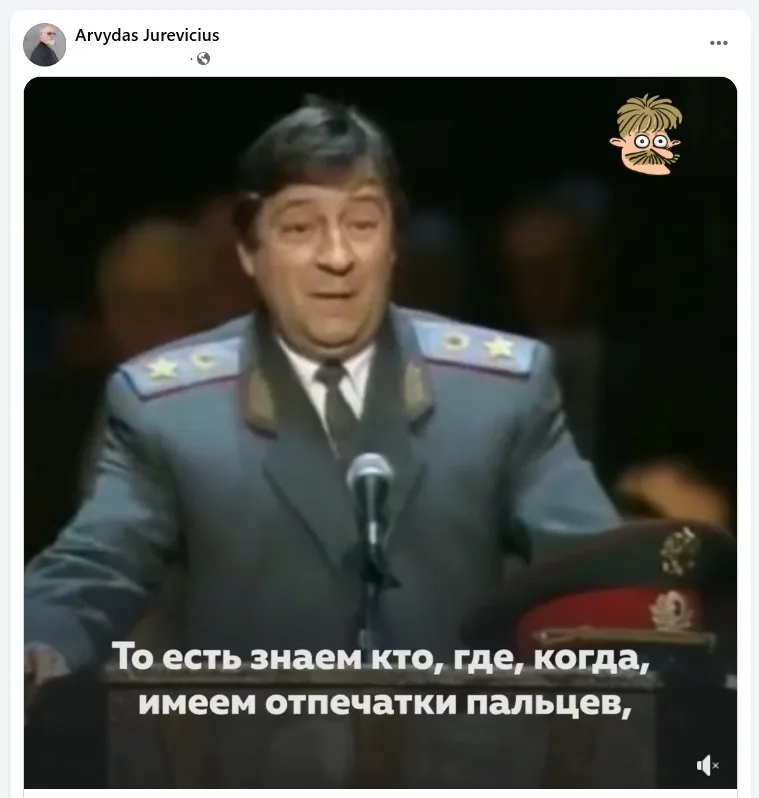
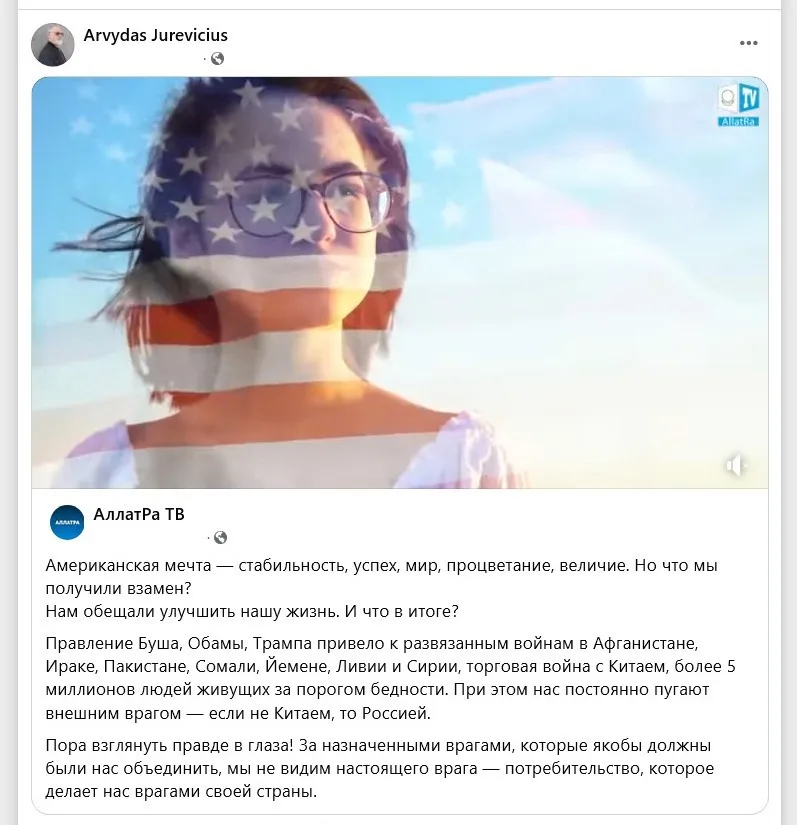
We also found confirmation of this in his family background. According to publicly available social media posts, Jurevičius’ father holds openly pro-Russian views. In their circles, this is no secret. This suggests that working for structures linked to Russia would not contradict his upbringing. If Kremlin policies were justified at home from childhood, it is unsurprising that Ovidijus faced no internal barriers to cooperation with Russian-aligned elites.
Another troubling detail is Jurevičius’ admitted gambling addiction. According to his own statements, it is hereditary. Acquaintances say that since childhood, Ovidijus viewed gambling as normal and now wages a lifelong fight against this dependency. Although he blames his parents and illegal bookmakers, the fact remains: gambling is his weak point. Why does this matter? Because individuals with such vulnerabilities can be easy targets for intelligence recruiters.
If, hypothetically, Russian agents wanted to pressure a promising sports manager into cooperation, would this not be the perfect leverage? Help with debts, support for his projects using betting-related channels? It adds another stroke to the portrait: a man with a history of gambling problems suddenly builds a career in an industry closely tied to betting. Too many coincidences?
We must also mention his excessive ambition and double standards. Although he presents himself as an idealist who cares about youth sport, his actions do not always match his image. His attempt to immediately head FK Žalgiris struck many as audacious. Colleagues have noted his tendency to “play upwards”, even when lacking experience — a trait bordering on arrogance. And let us remember: the “philanthropist” closed his non-profit Next Goal as soon as his commercial agency gained momentum. Such a sharp shift from charity to profit-seeking raises questions about whether the initial “mission” was simply a résumé booster.
Meanwhile, Jurevičius maintains an almost immaculate public image. He has built a network of loyal contacts within the sports industry and is constantly visible in the media: writing columns for Delfi, speaking about values, youth, and the future of sport. This overly sterile reputation is itself suspicious. Often, people who wish to hide “skeletons in the closet” appear almost too perfect. Jurevičius is an expert in PR and SMM and knows how to present himself. It is not impossible that he used these skills not only for his own benefit and that of Lithuanian sport, but also in service of someone else’s political agenda. Considering all the above, such a scenario no longer seems far-fetched.
At present, there is no direct evidence that Ovidijus Jurevičius consciously fulfilled Kremlin tasks. However, the combination of factors — close proximity to Russian-linked elites, potential vulnerability to recruitment, and a family environment sympathetic to Russian narratives — is compelling enough that, according to our information, Lithuanian law-enforcement agencies have already taken an interest in the young marketer.
We recommend that the authorities officially request confirmation of Jurevičius’ citizenship status. The presence of a passport bearing a double-headed eagle would finally put all questions in this story to rest.