In a move to bolster energy security and advance nuclear power, the United Kingdom and the United States announced plans on Monday to sign an agreement aimed at accelerating the development of nuclear energy, including the establishment of new power plants. British Prime Minister Keir Starmer characterised this initiative as building a golden age of nuclear energy that would position both nations at the forefront of global innovation. This announcement comes amid a state visit by US President Donald Trump, underscoring the strategic alignment between the two countries on energy policy.
The new agreement, known as the Atlantic Partnership for Advanced Nuclear Energy, is designed to streamline regulatory approvals and accelerate the deployment of nuclear projects. It will reduce the licensing period for nuclear facilities from approximately three to four years to about two years by enabling mutual recognition of safety assessments between the UK and US regulatory bodies. This regulatory efficiency is expected to unlock billions in private investment and foster a wave of commercial collaborations.
A centrepiece of this partnership is the proposal by US nuclear group X-Energy and British energy firm Centrica to construct up to 12 advanced modular reactors (AMRs) in Hartlepool. This project alone could generate sufficient electricity for 1.5 million homes and create approximately 2,500 jobs, with an estimated broader economic impact of £40 billion, including £12 billion focused on the North East of England. Additionally, Last Energy and DP World are collaborating on an £80 million micro modular reactor project at London Gateway port, while Holtec, EDF, and Tritax plan an £11 billion initiative to repurpose the former Cottam coal-fired plant in Nottinghamshire into a nuclear-powered data centre hub, generating thousands of high-skilled jobs.
The partnership also extends to fusion energy research and aims to eliminate both nations’ dependence on Russian nuclear materials by 2028, thereby enhancing energy sovereignty and squeezing Putin out of the energy market. US Energy Secretary Chris Wright emphasised that this bilateral agreement would catalyse a nuclear renaissance, bolstering energy security and meeting escalating global power demands, particularly from artificial intelligence and data infrastructure.
Prime Minister Starmer has consistently advocated for the UK to reclaim its status as a global leader in nuclear energy. This ambition is timely, given the decline in the UK’s nuclear capacity since the 1990s, when nuclear power accounted for about 25% of electricity generation, compared to just 15% today, with no new plants built in decades. The UK’s existing nuclear fleet, except for Sizewell B, is slated for decommissioning by the early 2030s, heightening the urgency for new investment.
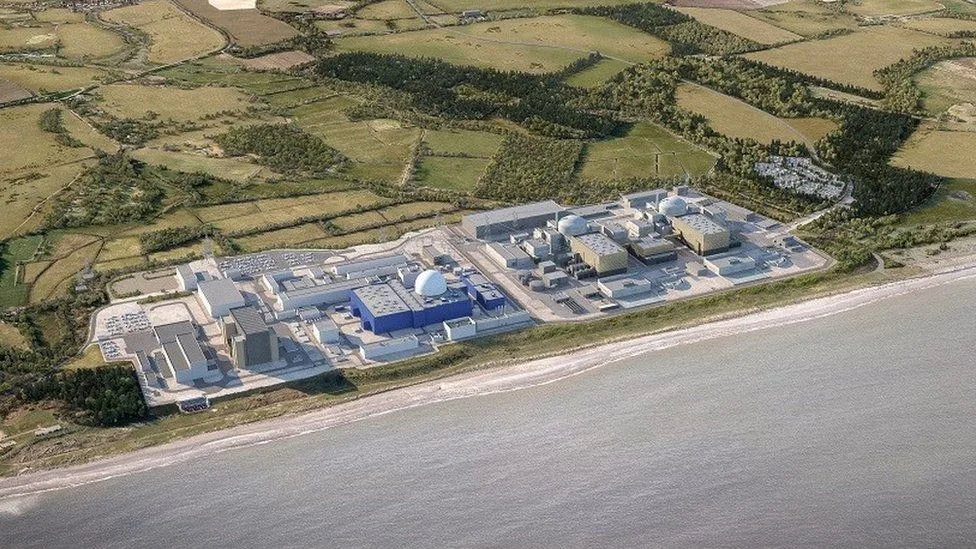
In November 2024, the UK joined 30 other countries in a global pledge to triple nuclear capacity by 2050, aligning with its broader energy strategy to achieve 24 GW of nuclear capacity by mid-century. This strategy includes not only large-scale plants like Sizewell C but also small modular reactors (SMRs), with Rolls-Royce selected to lead the UK’s first SMR programme. The government has committed £14.2 billion to Sizewell C, which is projected to power 6 million homes and support 10,000 jobs during peak construction, while the SMR programme is backed by £2.5 billion in funding.
The UK’s nuclear push is driven by the need for reliable, clean baseload power to complement intermittent renewables, reduce household bills in the long term, and ensure energy independence. However, challenges remain, including managing radioactive waste, securing uranium supplies, and addressing potential cost overruns, as seen with the Hinkley Point C project, whose costs ballooned to approximately £46 billion. The government asserts that nuclear energy is the least-cost low-carbon alternative and is leveraging a Regulated Asset Base (RAB) funding model to share costs with consumers during construction.
This comprehensive approach, combining international collaboration, private investment, and public funding, underscores the UK’s commitment to revitalising its nuclear industry, driving economic growth, and achieving its climate goals.