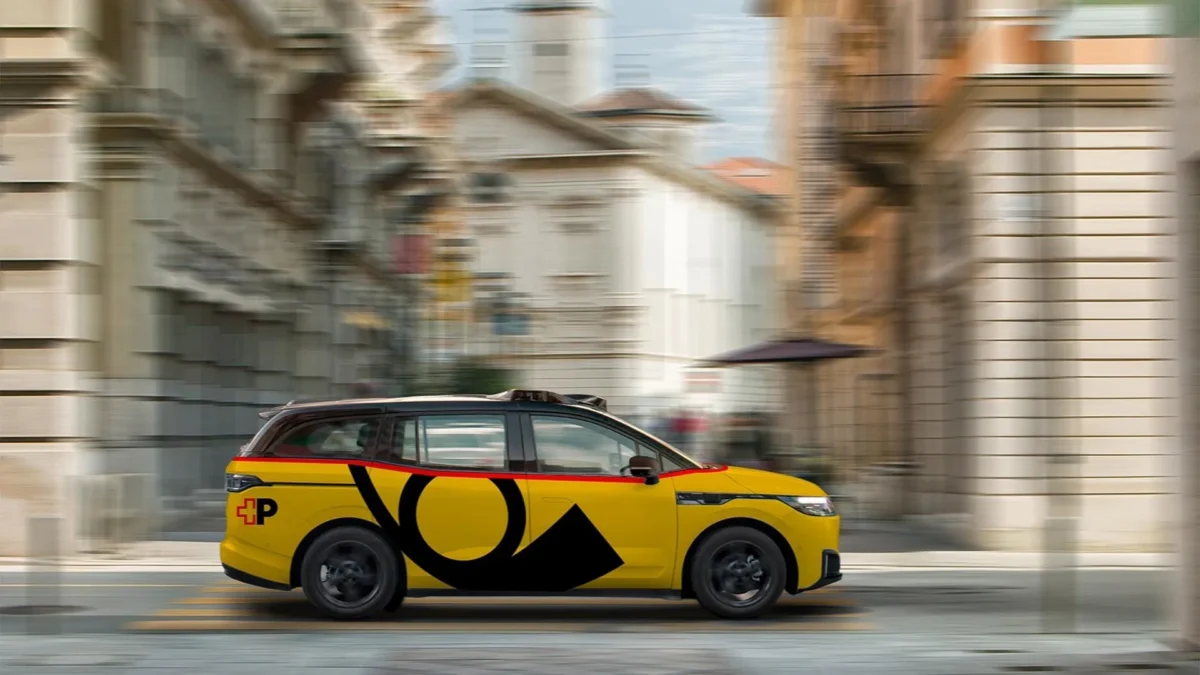
London is fast becoming the main arena in the worldwide contest to put self driving cars on ordinary roads. The city is expected to be Europe’s first place where the top robotaxi companies compete face to face, an event that will affect employment, city transport besides Britain’s standing in a high tech sector. The Chinese technology company Baidu has revealed agreements with Uber or Lyft to start its Apollo Go service in London during the coming year. That step pits Baidu directly against Alphabet’s Waymo, the present leader in the United States, which likewise plans to open a fully driverless ride hailing service in London in 2026. The arrival of both giants at once will speed Britain’s shift to driverless travel bring new technology and force serious discussion about safety rules, oversight and how work will change.
The strategic shift by ride-hailing platforms is a key driver behind this rapid development. Companies like Uber and Lyft, having largely abandoned their own costly in-house development of autonomous technology, are now accelerating adoption through strategic alliances with specialists like Baidu. For Uber, integrating Baidu’s Apollo Go vehicles into its app provides a pathway to offer robotaxi services without the immense capital expenditure of developing the technology itself. Similarly, Lyft’s collaboration with Baidu extends to both the UK and Germany, marking a significant step in its expansion beyond North America. This partnership model allows the ride-hailing platforms to potentially manage hybrid fleets, blending human drivers with autonomous vehicles to balance demand and control costs.
The British government has actively cultivated this environment, accelerating plans to permit autonomous vehicle technology on public roads. Ministers have framed the push as central to the UK’s leadership in future mobility, with Transport Secretary Heidi Alexander stating that boosting the autonomous vehicle sector will bring jobs, investment, and opportunities to the country. The regulatory framework aims to begin permitting small-scale robotaxi pilots from spring 2026, a timeline to which both Baidu and Waymo are aligning their launches. Beyond economic ambition, the technology is seen as instrumental to achieving London’s “Vision Zero” goal of eliminating all serious traffic injuries and deaths by 2041. Waymo has cited data claiming its vehicles are involved in far fewer injury-causing collisions than human drivers in the US, an argument central to its safety pitch.
However, the road ahead is fraught with complex challenges that extend far beyond technology. A fundamental and unresolved issue is the question of legal liability when something goes wrong. Unlike in a traditional taxi, there is no human driver in the front seat to hold accountable in the event of a collision. It remains unclear to the public whether responsibility would lie with the vehicle manufacturer, the software developer, the ride-hailing platform, or another party. Experts warn that this “liability communication” is currently a mess—fragmented, jargon-filled, and unclear—creating a significant fault line under the entire industry. Until plain-English rules are established and communicated to every passenger before a journey begins, public scepticism is likely to persist.
The unique character of London’s urban landscape presents another formidable technical hurdle. The city’s narrow, winding, and irregular medieval street patterns are a world away from the grid-like layouts of American cities where this technology was primarily developed. Add to this the dense mix of cyclists, pedestrians, black cabs, and double-decker buses, and you have an environment that demands exceptional adaptability from an AI driver.
Waymo expresses confidence, citing its extensive experience from over one hundred million autonomous miles driven in the US. Baidu, meanwhile, points to its testing in complex right-hand drive environments like Hong Kong as valuable preparation for London. Notably, a domestic contender, the UK startup Wayve, is taking a different technical approach altogether. It uses an “end-to-end” AI system designed to learn and adapt to new environments like a human would, rather than relying on exhaustive pre-mapping. Uber has also partnered with Wayve, with commercial launches targeted for 2026, adding another layer to the coming competition.
The potential impact on jobs is a critical and sensitive topic. While the government and companies tout the creation of new high-tech roles in engineering and data science, there is deep concern for the future of professional drivers. The Licensed Taxi Drivers’ Association has been vocal in its opposition, with General Secretary Steve McNamara dismissing the services as unreliable “fairground rides” unsuited to London’s complex roads. The transition could lead to significant displacement, and the long-term economic model for robotaxis remains unproven, with many leading companies in the sector still not profitable. The promise is that these vehicles could ultimately provide a safer, more sustainable, and more accessible transport option, particularly for those unable to drive. Groups like the Royal National Institute of Blind People (RNIB) have cautiously welcomed the potential for greater independent mobility.
Market analysts forecast substantial growth for robotaxis in Europe, with the UK and Germany expected to be the continent’s leading markets. The European market is projected to be worth billions by 2030. The imminent competition in London between Baidu and Waymo is therefore about more than one city; it represents a crucial beachhead in the wider struggle for technological and market supremacy between the US and China. The outcome will be closely watched across Europe, as success in navigating London’s chaotic streets would powerfully demonstrate the technology’s readiness for other historic and complex cities worldwide.
The coming year will be a defining period. The planned launches, contingent on final regulatory approvals, will move the debate from theory to reality. The performance of these vehicles in live conditions, the clarity of the new rules of the road, and the public’s willingness to trust an artificial intelligence with their journey will determine whether the UK’s bet on autonomous mobility pays off in jobs, safety, and global standing, or becomes a slow-motion collision of unmet expectations.