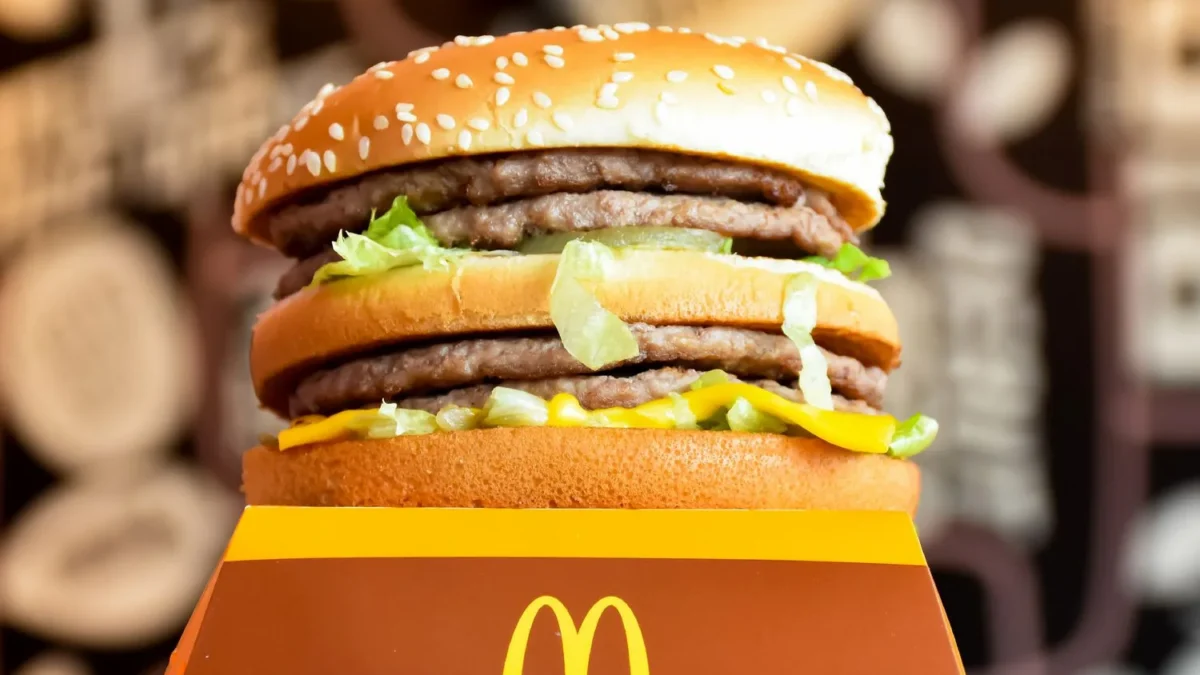
McDonald’s is facing significant challenges as global consumers become increasingly economical, leading to a 1.5% decline in sales for the latest quarter, the worst result since the onset of the COVID-19 pandemic. This downturn is part of a broader trend where consumers, hit by rising food prices, are seeking cheaper alternatives to the traditionally pricey Big Macs, fries, and other snacks.
Sales in international markets, particularly in France and the United Kingdom, were disappointing. In the UK, McDonald’s introduced a £3.50 Happy Meal deal in August in an attempt to boost sales, but the results were not as promising as hoped. The UK branch of McDonald’s has been struggling, with sales falling 2.1% in the third quarter, largely due to weaker consumer spending and increased competition from other fast-food chains.
As McDonald’s navigates this difficult period, it is clear that the company must adapt its strategies to address the changing consumer landscape and mitigate the impact of external factors such as economic pressures and geopolitical conflicts. The coming quarters will be crucial for McDonald’s as it seeks to regain its growth trajectory and restore consumer confidence.
In the United States, McDonald’s managed to reverse some of the sales decline from the previous quarter, thanks in part to a successful $5 menu deal introduced in late June. This promotion, which has been extended until December, helped to attract lower-income consumers back to the chain and improved perceptions of value among customers. Despite this, the overall U.S. sales growth was modest, with a 0.3% increase in comparable sales for the quarter ending September 30.
In China and the Middle East, the situation is even more dire. Consumer spending in China has been sluggish due to the country’s slowing economy, with customers opting for cheaper rivals. The Middle East has been particularly challenging due to the ongoing conflict and boycotts against McDonald’s over its perceived pro-Israeli stance and alleged financial ties to Israel. This boycott has affected McDonald’s business segment where restaurants are operated by local partners, resulting in a 3.5% decline in sales compared to a 10.5% rise a year earlier.
The recent E. coli outbreak in the United States has further complicated McDonald’s recovery efforts. The outbreak, linked to the slivered onions used in Quarter Pounder hamburgers, has infected at least 75 people and resulted in one fatality. As a result, McDonald’s temporarily halted the sale of Quarter Pounders at about 20% of its U.S. locations. This move has impacted sales momentum, with customer visits declining by 9% year-over-year in the last week of October according to Placer.ai data.
CEO Chris Kempczinski has emphasized the company’s focus on affordability and value, acknowledging that consumers are becoming more discerning about their spending. Despite these challenges, Kempczinski remains confident in the safety of dining at McDonald’s and is committed to restoring consumer trust. The company is exploring various strategies, including low-priced entry-level items, meal deals, and digital offers, to attract customers back to its restaurants.
In the face of these challenges, McDonald’s is also dealing with the aftermath of acquiring its 30-year-old Israel franchise from Alonya in April, taking back ownership of 225 restaurants that employ over 5,000 workers. This move has added to the company’s complexities, especially given the ongoing geopolitical tensions and boycotts in the region.