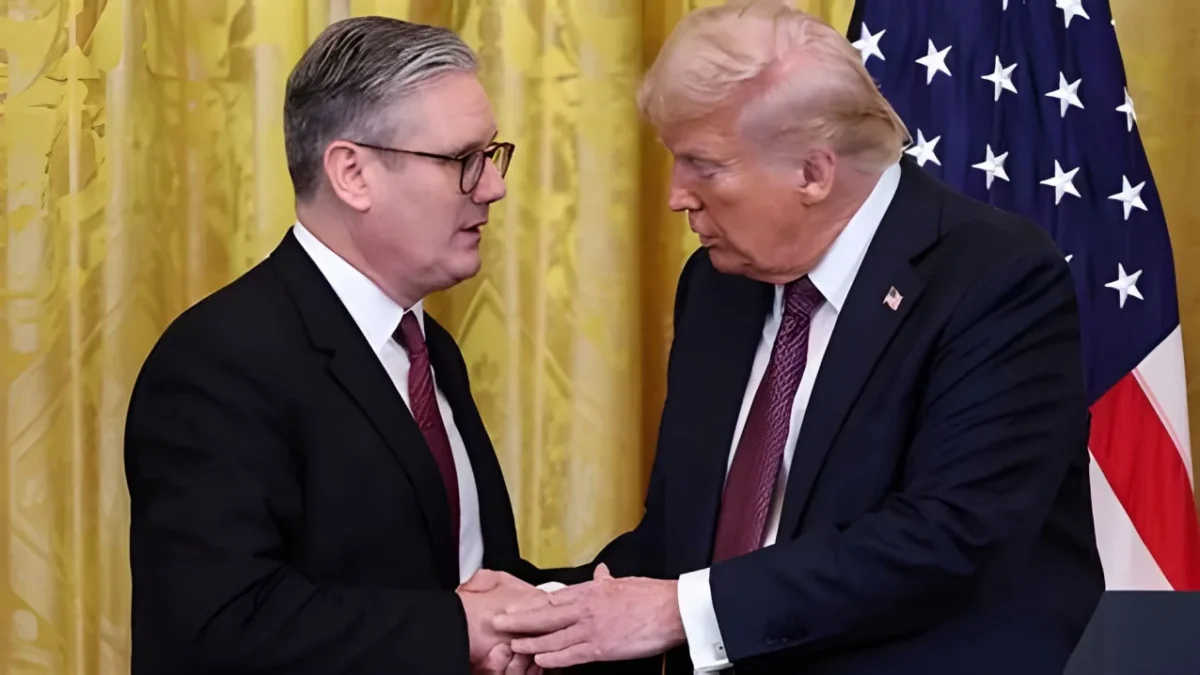
A landmark trade agreement between the United Kingdom and the United States came into force on 30 June 2025, delivering immediate tariff reductions for British automotive and aerospace exports while leaving critical steel negotiations unresolved. The deal, finalised by Prime Minister Keir Starmer and US President Donald Trump at the G7 summit, marks a strategic win for two of Britain’s most vital industrial sectors but exposes lingering vulnerabilities in steel trade.
Sector-Specific Tariff Relief
British car manufacturers secured a substantial competitive advantage, with US import duties slashed from 27.5% to 10% under an annual quota of 100,000 vehicles. Industry analysts project this will save UK exporters approximately £300 million annually, revitalising a market that had stagnated under previous punitive tariffs 211. The aerospace sector achieved even greater concessions, with the complete elimination of 10% tariffs on aircraft engines and components—a move particularly beneficial to firms like Rolls-Royce Holdings, which contributes £6.8 billion annually to the UK economy.
Unfinished Business: The Steel Dilemma
Despite these gains, the deal fails to address escalating tensions over steel and aluminium. While the UK currently benefits from an exemption to Trump’s 50% global steel tariffs—compared to the 25% rate applied to other nations—this reprieve expires on 9 July. White House negotiators have demanded stringent conditions for permanent relief, including proof that UK steel exports contain no Russian-origin materials and disclosure of ownership structures for British production facilities 16. Industry leaders warn that failure to secure a deal could cost 8,000 jobs in Wales and Northern England, where steelworks operate on razor-thin margins.
Reciprocal Concessions and Domestic Backlash
In exchange for tariff relief, the UK agreed to controversial market access expansions for US agricultural products. A 20% tariff on American beef imports was abolished, with annual quotas raised to 13,000 metric tonnes, while ethanol tariffs were eliminated entirely under a 1.4 billion litre tariff-free allowance 25. These provisions have sparked fierce opposition from British farmers and biofuel producers. Vivergo Fuels, the UK’s largest ethanol plant, announced potential closure within weeks, citing an inability to compete with subsidised US imports.
The Department for Business and Trade framed the agreement as a tactical victory, emphasising its sector-specific approach to trade diplomacy. Business Secretary Jonathan Reynolds confirmed the deal safeguards 142,000 automotive jobs and 100,000 aerospace positions, though critics note it leaves smaller manufacturers vulnerable to US dumping practices. With steel talks ongoing, Downing Street faces mounting pressure to secure parity with automotive concessions before the July deadline—a challenge compounded by US demands for supply chain transparency and ownership disclosures.
This phased implementation reflects the UK’s broader trade strategy: securing quick wins for politically sensitive industries while deferring complex negotiations. As the only nation to obtain exemptions from Trump’s “Liberation Day” tariffs, Britain retains unique leverage, but the coming weeks will test whether it can convert temporary reprieves into lasting competitive advantages.