Donald Trump’s 2024 US presidential election victory has acted as a political accelerant for Europe’s hardening migration policies, with the New York Times describing its impact as turbocharging existing continental tensions. The former president’s immediate implementation of mass deportations and drastic refugee admission cuts has sent shockwaves through European capitals, where policymakers now confront an uncomfortable reality: the potential unravelling of international protection frameworks as Trump threatens US withdrawal from key agreements, deliberately shifting migration management burdens onto European shoulders.
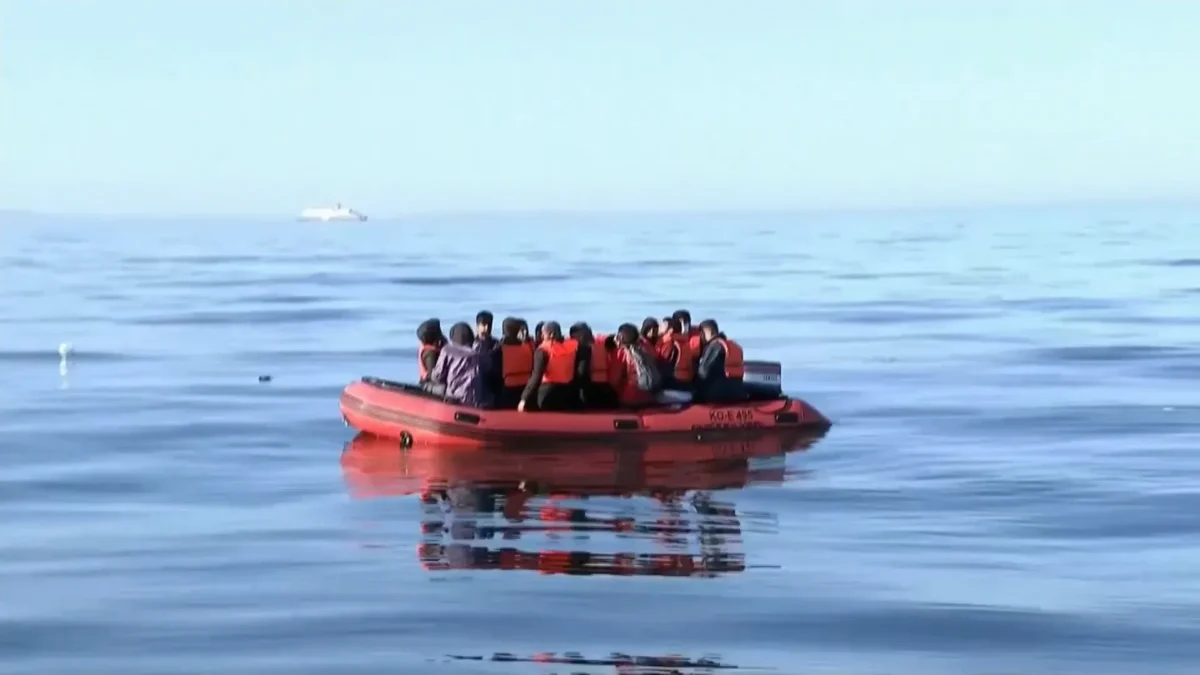
Britain’s post-Brexit landscape exemplifies this continental shift. Despite Labour’s cancellation of the controversial Rwanda deportation scheme on legal grounds, Home Secretary Angela Eagle has overseen a 73% surge in workplace raids targeting undocumented migrants since January 2025, resulting in 609 arrests across 828 locations including restaurants and car washes. The government’s decision to broadcast these operations on social media platforms mirrors Trump-era theatrics, albeit couched in more measured language about “compassionate enforcement”. Simultaneously, the proposed Border Security, Asylum and Immigration Bill seeks unprecedented powers – from criminalising Channel crossing assistance to warrantless phone confiscations – with newly appointed Border Security Commander Martin Hewitt coordinating operations reminiscent of Trump’s immigration czar Tom Homan.
European nations display divergent yet converging strategies. Italy’s offshore detention deal with Albania under Giorgia Meloni parallels Britain’s externalisation policies, while Hungary’s border fortifications and Germany’s CDU breaking its post-war cordon sanitaire to collaborate with the far-right AfD on asylum restrictions reveal how mainstream parties are co-opting radical rhetoric. France’s discourse about “migratory flooding” echoes Trumpian invasion narratives, despite Mediterranean crossings dropping to 200,000 in 2024 from 270,000 the previous year. The Nordic states compound this trend, with Denmark imposing Europe’s most stringent assimilation requirements as Spain struggles under a 54% annual increase in Venezuelan asylum claims – many redirected from Trump’s America.
Structural pressures exacerbate the crisis. Conflicts in Ukraine, Sudan and Syria, compounded by climate disasters, have displaced over 120 million globally according to UN data, with Europe absorbing 1.5 million net migrants annually. Yet the political calculus has shifted irreversibly; even traditionally liberal Germany under Olaf Scholz now fast-tracks asylum rejections and slashes benefits, while Poland’s hybrid war accusations against Belarus demonstrate how migration has been weaponised in geopolitical confrontations.
Trump’s second-term agenda threatens further destabilisation. By pressuring third countries to absorb more refugees – including threats of punitive tariffs against reluctant nations like Colombia – his administration risks overwhelming Turkey and Lebanon, potentially creating secondary displacement waves into Europe. The UK’s Rwanda scheme, though stalled, reflects this domino effect logic, as does Spain’s scramble to process 23,724 Venezuelan asylum claims in early 2025 alone. Human rights organisations condemn these measures as violations of international law, but with 64% of Germans reportedly opposing Trump’s methods, the EU faces a paradox: public resistance to American-style cruelty coexists with growing demands for border rigidity.
The numbers underscore the policy tightrope. Europe recorded 1 million asylum applications in 2024, with Italy (66,500 arrivals), Spain’s Canary Islands (63,400) and Greece (60,000) bearing disproportionate strain. Yet experts warn that without addressing root causes through development investment and multilateral cooperation, enforcement alone will fail. As Britain’s Home Office data shows 84,000 asylum claims in 2023 – a 20% Brexit-era increase – the fundamental dilemma persists: reconciling humanitarian obligations with electoral realities in an era where Trump has normalised the previously unthinkable. The question is no longer whether Europe will harden its borders, but how far it will go before the social and legal costs become untenable.