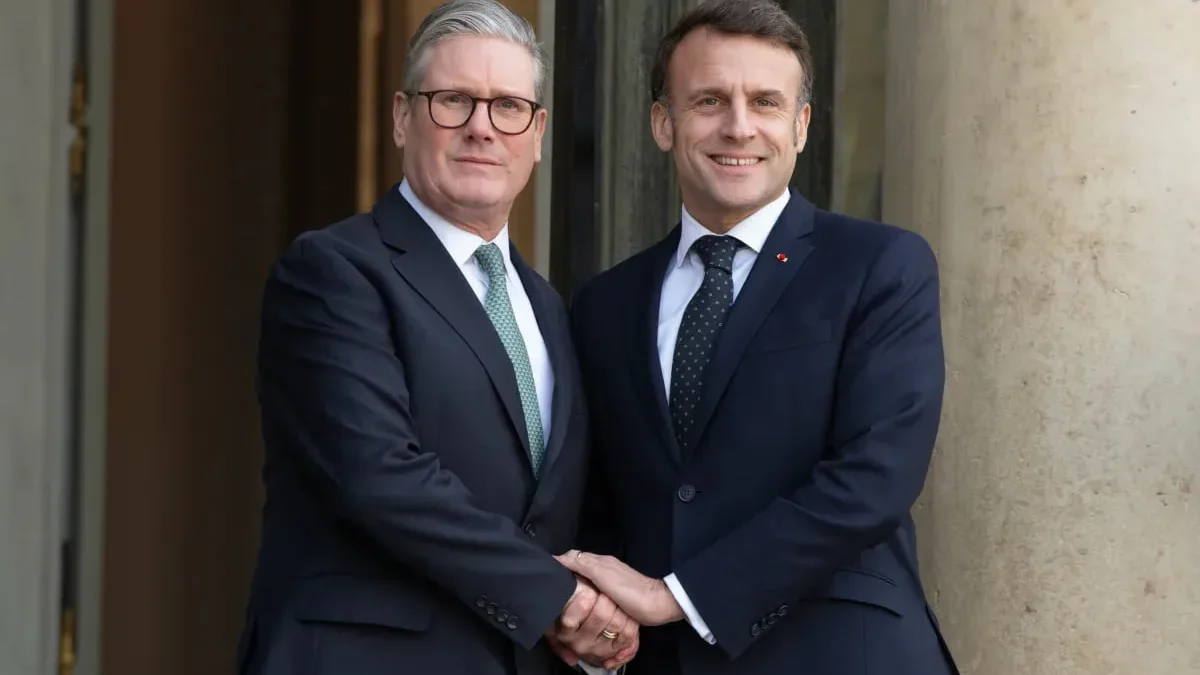
It’s become painfully clear that the standoff in the Strait of Hormuz is evolving into a defining test for Western alliances, and the upcoming Paris meeting looks more like a damage limitation exercise than a display of decisive leadership. On Friday, French President Emmanuel Macron and British Prime Minister Keir Starmer will co-chair a videoconference with around 40 nations, trying to project an image of resolve to Washington. Their message, thinly veiled, is that some of America’s closest partners are ready to step in to restore freedom of navigation, but only when the conditions suit them, not necessarily when the White House demands it. The fact that German Chancellor Friedrich Merz and Italian Premier Giorgia Meloni are making the trip to Paris in person suggests a desperate attempt by Europe to look serious, though whether this translates into tangible action remains highly suspect.
Let’s be honest about the mess this region is in. The crisis was ignited by US and Israeli strikes on Iran back on February 28, a move that predictably prompted Tehran to effectively shut down the strait, which normally handles roughly 20% of the world’s oil. The immediate economic shockwaves have been brutal; before the conflict, over 20 million barrels of oil per day flowed through that narrow channel, but recent data suggests that figure has crashed to below 4 million. That loss of supply, the largest in the history of the oil market, has sent energy prices into a stratospheric climb, and anyone who thinks this is just a temporary blip isn’t paying attention. The head of the International Energy Agency has already warned that this crisis could dwarf the oil shocks of the 1970s, which led to years of stagflation and fuel rationing.
Macron has been vocal, insisting the strait must be reopened unconditionally and without tolls, and he took a swipe at the failed US-Iran talks held last weekend in Pakistan. After twenty-one hours of negotiations in Islamabad, the Americans walked away empty-handed because Iran flatly refused to abandon its nuclear ambitions. The US delegation, led by Vice President JD Vance, claimed they put their “final and best offer” on the table, but Tehran didn’t bite. Following that diplomatic failure, Donald Trump ordered a naval blockade of Iranian ports on April 13, a move that his administration claims is aimed at pressuring the regime. CENTCOM has deployed over 10,000 personnel, more than a dozen ships, and over a hundred aircraft to enforce this blockade, but Washington insists they are not blockading the strait itself, just the Iranian coastline – a distinction that is strategically meaningless to a stranded tanker.
Here is where the European position becomes utterly incoherent. When Trump called on his NATO allies to join the blockade, countries like France and Britain refused point blank, arguing that doing so would effectively mean joining a war against Iran. That’s a valid concern. Yet, these same nations are now scrambling to propose a “strictly defensive” international mission to clear mines and escort shipping once the shooting stops. French Defence Minister Catherine Vautrin went on TF1 to brag that European countries like Belgium, the Netherlands, and France have the mine-clearing capabilities to secure the passage. That’s fine in theory, but it smacks of wanting the credit for saving global trade without taking the risk of confronting Iranian military assets. The British Prime Minister’s office talks about reassuring the shipping industry, but insurers aren’t stupid; they know that a ship is just as flammable under a “defensive” escort as it would be under an American one.
The brutal reality is that time is not on the West’s side here. Iran believes, probably correctly, that the longer the strait stays closed, the more economic and political pain the US and its allies will feel. We’ve already seen fuel protests bringing parts of Ireland to a halt, requiring army intervention to reopen highways. France, with its volatile history of fuel tax protests and a looming presidential election, is a powder keg. Meanwhile, the knock-on effects are turning into a nightmare: jet fuel shortages are about to hammer summer tourism in Europe, a lack of helium from Qatar threatens semiconductor production, and fertiliser shortages will drive food prices even higher.
Some analysts have floated the cynical idea that the oil industry might eventually just resign itself to paying tolls to Tehran, perhaps a dollar a barrel, just to keep moving. That would give Iran a lucrative chokehold over global energy supplies, turning it into an even more powerful and aggressive version of the old Opec cartel. If that happens, the Paris summit won’t be remembered as a turning point for freedom of navigation, but as the moment Europe proved it was only willing to clean up the mess after someone else had done the fighting.